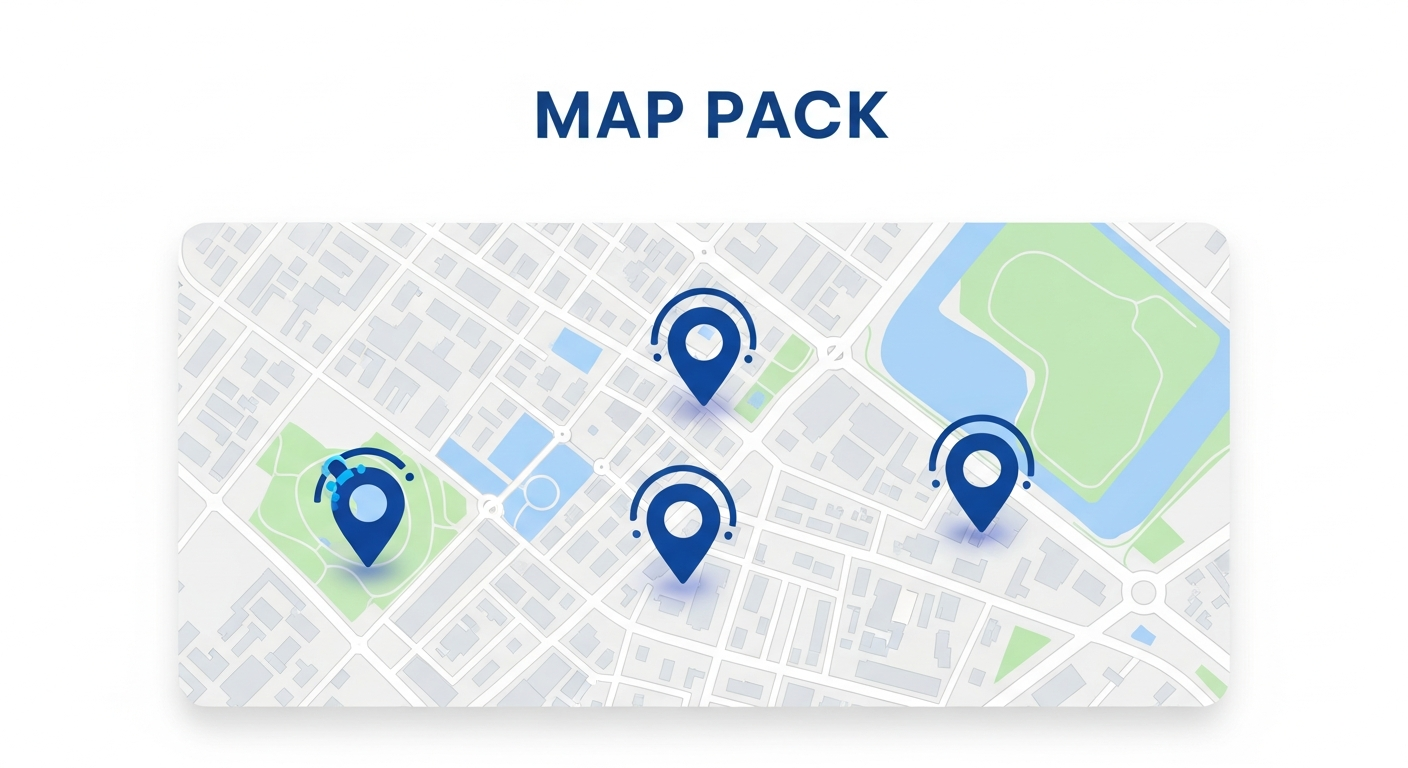
Landing in the Google Map Pack (the Top 3 results) is the single most effective way to drive calls, bookings, and foot traffic to your local business in 2026. This is the ultimate guide, designed to take you from obscurity to local dominance.
Introduction: The Landscape of Local Search in 2026
The digital world has shifted. In 2026, search is no longer just a list of links; it's an AI-curated experience. When a user in Cornwall searches for an "emergency plumber" or a "dentist near me," they aren't looking at the 10th result on the second page. They are looking at the Map Pack—the three businesses Google trusts enough to place front and center.
This guide isn't about "hacks" or "shortcuts." It's about building a sustainable local marketing ecosystem that Google's algorithm (and its new AI-driven search generative experiences) will naturally prioritize. We will break down the ten phases of local SEO mastery.
Is your business ranking where it should?
Stop losing leads to competitors. Get a free digital audit of your Google Business Profile and see exactly what's holding you back.
Phase 1: The Core Trinity - Relevance, Distance, and Prominence
Google's local algorithm is built on three pillars. Understanding these is essential before you change a single word on your profile.
Relevance
How well does your business match the searcher's intent? Google analyzes your categories, services, and content.
Distance
How far are you from the user? While fixed, you can optimize for service areas to signal reach.
Prominence
How authoritative is your business? Built through reviews, citations, and digital signals.
Phase 2: Technical Foundation & Verification
In 2026, verification is harder than ever. Google often requires video verification. You must show your physical signage, your tools, and your business license in a single, unedited video. This is Google's way of ensuring you are a real business, not a "lead gen" shell.
Once verified, the first thing you must check is your N.A.P. consistency. Your Name, Address, and Phone number must be 100% identical everywhere. If your website says "Suite 100" but Google says "Ste 100," you are already losing points.
Want a Top 3 Strategy?
Stop losing leads to competitors who rank above you. Get a free digital audit of your business in 60 seconds and uncover the exact steps to reach the Top 3.
Phase 3: The Art of Profile Optimization
Most business owners fill out the basics and stop. To hit the Top 3, you need to go deeper.
Mastering Categories
Your primary category is the single most important factor on your profile. If you're a plumber, don't just pick "Plumber." If you specialize in heating, "HVAC Contractor" might be better. Then, use secondary categories to capture the rest of your services.
Service Descriptions
Don't just list your services. Describe them. Use the space Google provides to explain *how* you solve the customer's problem. This is where you naturally integrate your target keywords.
Phase 4: Visual Storytelling and AI-Readiness
Google's AI can now "read" your photos. If you upload a photo of a new furnace installation, Google's AI identifies it and associates your business with "furnace installation."
You need at least 100 high-quality photos. Include team photos, interior/exterior shots, and "before and after" projects. In 2026, short video updates (Google Posts) are also essential for keeping users engaged on your profile.
Phase 5: The Social Proof Engine (Reviews & Reputation)
Reviews are the lifeblood of local SEO. Google looks at three metrics:
- Velocity: How often are you getting new reviews?
- Diversity: Are different customers mentioning different services?
- Response Rate: Are you responding to every review within 24 hours?
Pro Tip: Encourage customers to mention the specific service and city in their review. "Best HVAC repair in Cornwall" is a powerful ranking signal.
Phase 6: Digital Authority & The Citation Ecosystem
Citations are mentions of your business on other websites. Think of them as digital votes of confidence. You need to be listed on high-authority directories like Yelp, Facebook, and industry-specific sites.
More importantly, you need *local* citations. A link from a local Cornwall news site or charity is worth more for local SEO than a link from a national blog.
Phase 7: On-Page SEO for Local Authority
Your website and your GBP are two sides of the same coin. Your website must be optimized for local search. This includes having a dedicated page for every service you offer and every city you serve.
Use LocalBusiness Schema markup to tell Google exactly where you are and what you do. This "structured data" helps search engines index your information with 100% accuracy.
Phase 8: Behavioral Signals - Winning the Click
Google tracks how users interact with your profile. Do they click "Call"? Do they ask for directions? Do they click through to your website?
To win the click, your profile must be more attractive than your competitors. This means having a higher star rating, better photos, and active Google Posts. The more engagement your profile gets, the more Google will prioritize it.
Phase 9: AI Search & The Future of Discovery
In 2026, Google's Search Generative Experience (SGE) summarizes local results. It might say, "Based on reviews, LiFet Media is known for rapid response times and excellent automation systems."
To win in the AI era, you need to provide clear, structured information that AI can easily parse. This means using bullet points in your descriptions and ensuring your website is highly readable for both humans and machines.
Phase 10: Monitoring and Continuous Growth
Local SEO is not a "set it and forget it" task. You need to monitor your rankings across different parts of your city. Use a local grid tracker to see if your ranking drops as you move further from your office. If it does, you need to build more "prominence" to expand your ranking radius.
Phase 11: Local SEO for Multi-Location Businesses
If you have more than one location, your strategy must be multiplied. Each location needs its own Google Business Profile, its own set of photos, and its own unique reviews. Never use the same phone number or landing page for multiple locations. Google needs to see each branch as a distinct local entity.
Create a "Locations" hub on your website that links to individual, hyper-local landing pages for each branch. This reinforces the connection between your brand and each specific neighborhood you serve.
Scaling Your Local Reach?
Managing multiple locations is complex. Let our AI systems handle the heavy lifting of profile management and review automation for all your branches.
Phase 12: The Role of AI in Local Search Ranking
In 2026, Google's AI doesn't just read your text; it understands the sentiment behind your reviews and the context of your photos. If your reviews consistently mention "fast service" and "friendly staff," Google's AI will categorize you as a high-quality service provider.
To optimize for AI search, you must be the "best" answer, not just the "closest" one. AI-driven search generative experiences prioritize businesses with the most comprehensive data and the highest trust signals.
Phase 13: Voice Search Optimization
"Hey Google, find a 24-hour plumber near me." Voice search is the primary way people find local services while driving or multitasking. Voice queries are longer and more conversational.
Optimize for voice by including natural language questions and answers on your website and in your GBP description. Focus on long-tail keywords that sound like real questions.
Phase 14: Mobile UX and Local Conversion
Most local searches happen on mobile. If your website is slow or hard to navigate on a phone, you will lose the lead before they even see your offer. Ensure your "Call" and "Book Now" buttons are prominent and easy to tap.
A mobile-optimized experience signals to Google that you provide a good user experience, which in turn boosts your ranking prominence.
Phase 15: The Future of the Map Pack
The Map Pack is evolving into a transactional interface. Soon, users will be able to complete entire bookings or purchases without ever leaving the Google interface. Businesses that adopt "Google Booking" and "Google Messaging" early will have a massive advantage.
Stay ahead by being the most active and technologically integrated business in your local market.
Your Local Domination Checklist
Verify GBP via Video Verification
Audit N.A.P. across 50+ directories
Select 1 Primary & 5+ Secondary Categories
Upload 100+ Geotagged Photos
Automate Review Requests (SMS/Email)
Post to GBP 2x per week
Ready to Dominate the Top 3?
Don't leave your local growth to chance. Let our experts build the ultimate marketing ecosystem for your business.
Schedule Your Free Strategy CallWas this article useful?
164 people found this article useful.